

Before You Go: Mongolia
Mongolia is the most remote place we ride, and the practical side matters more here than anywhere else: the cold at night, the ger camps, the money, and a visa rule with a date on it. The day-by-day is on the ride page, Mongolia, 11 days. Anything we have missed, ask us.
Getting There
The ride starts and ends in Ulaanbaatar. The airport is Chinggis Khaan International (airport code UBN), about an hour’s drive south of the city. There are no direct flights from Australia, so most riders connect once, through a hub such as Seoul, Hong Kong, Beijing or Istanbul. We do not book flights, but tell us your arrival time once you have it. Arrive a day early if you can: the time difference from Australia is small, but the flights are long and the first ride day starts with a city walk.
Your arrival airport transfer is included. After immigration and bags, look for the sign with your name on it in the arrivals hall. Wait there if it takes a moment, and decline any taxi offers in between. We send you the local contact number before you fly. The transfer runs to the ride hotel on the arrival day, and hotel check-in is from 2 pm. On the last day we help you get to the airport or on to wherever you are going next.
Visas and Entry
Australians, Britons and Canadians can enter Mongolia without a visa for up to 30 days under an arrangement that is confirmed to 31 December 2026 as we write this. New Zealanders and Americans should check their own terms on evisa.mn. Our 2027 departures fall after that date. Mongolia has extended the arrangement before, but nothing is published for 2027 yet. Check the official e-visa site, evisa.mn, and the Smartraveller page for Mongolia before you book flights, and we will tell every booked rider what applies before departure. If a visa is needed, the e-visa on evisa.mn is the route, and we can supply a letter of support. Visa costs are not included in the ride price. The Australian advice also says to register with the Mongolian Immigration Agency within 48 hours of arriving, online or through your accommodation, so ask the hotel to do it at check-in.
Your passport needs at least six months’ validity when you arrive, and the e-visa site asks for 180 days. If you are travelling on to China or Russia afterwards, sort those visas well before you leave home, because both are slow.
Money and Tipping
The currency is the tögrög, which you cannot buy outside Mongolia, at roughly 3,600 to the US dollar. Change money or use an ATM in Ulaanbaatar on the first day. There are ATMs at the airport and plenty in the city, and the exchange counters in town give better rates than the airport. Cards work in the city hotels, restaurants and shops. Once we leave Ulaanbaatar the ride is cash only. The provincial towns, Tsetserleg included, have ATMs, but do not count on one working for a foreign card. Draw what you need in the capital, in small notes, because a herding family cannot change a large one. US dollars are the best currency to bring, in clean, newer notes, as old or marked notes are refused. Tell your bank you are travelling.
Your meals, the ger camps and hotels and the support vehicles are paid for, so your spending money covers drinks, souvenirs and your own time in Ulaanbaatar. There is very little to spend money on in the countryside, and most riders find a couple of hundred dollars’ worth of tögrög covers the ride.
Tipping is not a Mongolian custom, and the families we stay with are paid for their hospitality rather than tipped. The ride team is the exception. If you would like to tip the guides and drivers at the end, it is appreciated and never expected, and riders typically give 0 to 100 USD per person, as the ride page says. In Ulaanbaatar restaurants a small tip for good service is becoming normal.
Staying Connected
Buy a local SIM at the airport or in the city on the first day. The main networks are Mobicom and Unitel, and both sell tourist data packs, with your passport for registration. Coverage is good in Ulaanbaatar and the provincial towns and patchy to absent on the steppe, and the family ger camps have no Wi-Fi. Treat the countryside days as time off the grid. The hotels in Ulaanbaatar and Tsetserleg have Wi-Fi, and the group’s WhatsApp chat works wherever there is a signal.
Health and Insurance
See a travel doctor at least six weeks before you fly. There are no compulsory vaccinations for Mongolia and no malaria, but a travel doctor will tell you what is recommended for you. The main health considerations here are the cold, the sun and the altitude. Most of the ride is above 1,300 m, the air is dry and the sun is strong, so drink more than you think you need, cover up and use sunscreen even on cool days. Bring enough prescription medication for the whole trip, in its original packaging, and a small first aid kit of your own: plasters, rehydration salts, anti-diarrhoea tablets, painkillers, lip balm and sunscreen. A first aid kit travels with every ride and the guides are trained in first aid. Hospitals are a long way apart outside the capital, and the nearest one can be two to three hours’ drive.
Travel insurance is a condition of riding with us, and we ask for your policy details before the ride. Check that it covers cycling, medical treatment and evacuation, and carry a copy of the policy and the insurer’s emergency number. If something serious happens, your insurer arranges and pays for an evacuation, and we make the call on your behalf and work with them. The Smartraveller insurance guide explains what to look for.
Drink two to four litres of water a day. The vehicles carry bottled water and the camps boil water for tea, but do not drink from streams. Smartraveller‘s advice for Mongolia is to exercise normal safety precautions, updated 12 October 2026. It also notes a national fuel shortage that can disrupt flights and road transport at short notice, so keep an eye on your connecting flights before you leave.
Weather and the Best Time to Ride
We ride in May and September, the two ends of the short Mongolian summer, when the weather is clearest and the steppe is quiet. Both months are dry and sunny with cold nights, and both can throw anything at you in a day: a warm, windless afternoon, then a cold front, then snow flurries, then sun again. Mongolians call it four seasons in one day, and over a ride you will see all four. In May, days are typically 10 to 20 degrees and nights 0 to 10, with wind and dust, and the steppe is still brown from winter. In September the days are 0 to 20 and the nights drop to minus 5, the air is calm and clear, and the grass has turned gold. June to August is warmer and greener, with more rain and more tourists, which is why we avoid it. Winter is minus 30 in the capital and is not a cycling season.
For the numbers: Ulaanbaatar’s average daily high is about 18 degrees in May and 17 in September, with around 22 mm of rain in May, 65 mm in August and 28 mm in September (long-term averages for the capital; the camps sit higher and run colder).
The departure months are on the Mongolia page and the dates page.
What to Pack
Mongolia is not a pack-light destination. You need layers for a day that starts below freezing and ends at 20 degrees, kit for dust and wind on the bike, and your own bedding for the ger nights. The vehicles carry your bag, so a soft duffel is ideal, as it rides better in a van than a hard suitcase. Laundry is a bucket of warm water on the rest days, so bring enough to get through without it.
On the Bike
There are no e-bikes on this ride, so the legs do the work on days of 15 to 80 km. A helmet (compulsory; bring your own if you can, though we have helmets on hand). Padded cycling shorts, and tights or leg warmers for cold mornings. Long-sleeved jerseys and a windproof jacket; we give you a Social Cycles jersey with back pockets. Closed shoes with a stiff sole: the bikes come with flat pedals, and you can bring your own pedals for clip-in shoes. Full-finger gloves, sunglasses for the dust and the glare, a buff for your face on windy days, a cap for under the helmet. A water bottle, sunscreen and lip balm. A gel seat cover is popular on the corrugated tracks.
Off the Bike and in the Ger
A warm jacket, a fleece, thermals, a beanie and warm socks for the evenings. A sleeping bag comfortable to minus 5 or minus 10, or ask us to provide one, as the bedding at the family gers is limited. A sleeping bag liner and, if you like a softer bed, a thin inflatable mat. A head torch with spare batteries, because evening light at the camps may be a candle. Earplugs. A quick-dry towel, as towels are not provided outside Ulaanbaatar. Sandals or slip-on shoes for the walk to the toilet.
The Small Things
Passport and a spare passport photo. A printed copy of your insurance policy. Prescription medication and a small first aid kit. Wet wipes and hand sanitiser, which do the work of a shower on the camp nights. Insect repellent for the still evenings by the river. A power bank and your chargers, plus a travel adapter. A money belt and small US dollar notes. Zip-lock bags for the dust, and a few snacks and instant soups if you are vegetarian, vegan or gluten-free, because the countryside kitchens are simple.
Life in a Ger
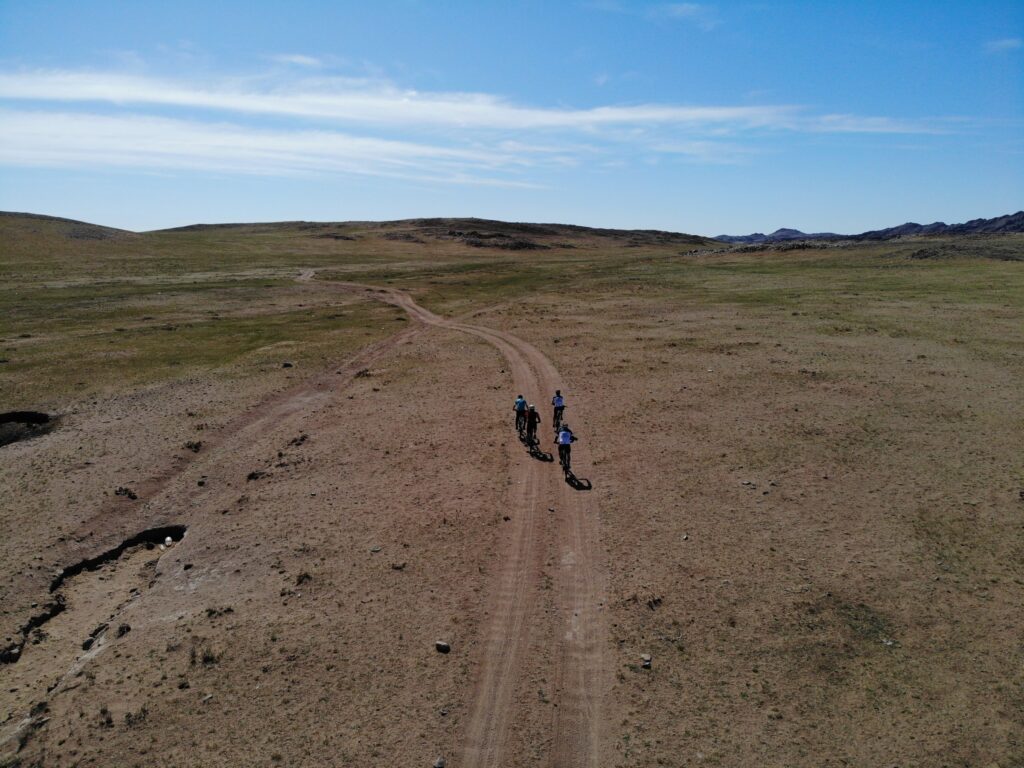
Ten nights, three of them in hotels: Ulaanbaatar at the start and the end, and the town of Tsetserleg in the middle. The rest are gers, the round felt tents that Mongolians have lived in for centuries. We choose family-run camps over the big tourist camps on purpose. A herding family’s camp has a few gers, and you eat with the family rather than in a dining hall. Nights 8 and 9 are at the ger camp of a herding family near the Orkhon River. A ger has a few simple beds and a stove in the middle. The stove is lit for you on cold evenings and burns wood or dried dung, and there are gaps for fresh air, which is why you bring a sleeping bag. There is no electricity at some camps and no running water at most.
Bathrooms at the camps are a pit toilet in a small hut a short walk away, sometimes a sit-down one, usually a squat, and a shower only where the itinerary says so. A bowl of warm water for a wash is always available if you ask. Out on the road, the toilet is behind a hill with the trowel and bag the team gives you. Bury paper or bag it, never burn it on the grassland, and bag wet wipes and sanitary items for the vehicle’s rubbish. The views from these stops are some of the best in Mongolia.
Food in the countryside is simple and hearty: mutton, noodles, dumplings, rice, dairy from the family’s own animals, and a Mongolian barbecue on most rides. Fresh vegetables are scarcer than at home. Vegetarians and vegans are catered for, but expect a plainer plate and bring some protein snacks. The same applies if you are gluten-free, where breakfast is the hard meal. Tell us your dietary needs on the booking form once you have paid your deposit, and we will tell you honestly what to expect. Drinks with meals are not included, and in the countryside that mostly means the odd beer or vodka toast with a host.
Culture and Photography
Mongolians are hospitable and formal in ways that are easy to miss. A few habits earn a warm welcome. In a ger, do not step on the threshold or lean on the two central posts, keep your feet pointing away from the fire and the altar, and put rubbish in the fuel pan by the stove, never in the fire itself. Pass and receive things with your right hand, sleeves down. When a host offers tea, milk or food, accept it and at least taste it, because refusing is rude, and so is standing up to drink. If vodka comes round, a sip is enough, and the cup goes back to whoever offered it. Do not whistle indoors, and do not touch anyone’s hat. Outside, give the milking and the tethered animals a wide berth, and remember that the dogs are working dogs, not pets. Sain baina uu is hello and bayarlalaa is thank you.
Ask before you photograph a person, and especially before you photograph inside a family’s ger, where you are a guest. Do not photograph children without a parent present and their consent. It is part of our child protection policy, and the ChildSafe Movement’s tips for travellers explain why. On the visits to the organisations we support, we do not photograph children at all. The landscape needs no permission, and it is the best subject in the country.
Shopping is an Ulaanbaatar affair: cashmere, felt and leather goods, and the State Department Store for a bit of everything. In the countryside there is almost nothing to buy, which is part of the charm.
If Something Goes Wrong
Every ride carries a first aid kit and the guides are trained in first aid. For a cut, a sprain or a bout of dehydration, the team treats you on the spot and drives you to the nearest clinic if it is needed, which outside the capital can be two to three hours away. For anything serious, we contact your insurer and, if needed, your embassy, and we call the emergency contact you gave us on the booking form. Your insurer runs the evacuation. That is why we insist on travel insurance, and why it must cover evacuation from a remote area. The support vehicles are with the group every day, and a rider who has had enough rides in one.
The Australian Government’s travel advice for Mongolia is on Smartraveller. We follow it, and so does your insurer.