


Destinations · Vietnam

Cycle Vietnam

Rides
4
Days
12 to 20
From
2,950 AUD
Partner Organisations
2

Why We Ride

The Mekong Delta in the South, the Mountains in the North

We ride Vietnam at both ends, and there is no Vietnam-only ride: you arrive from Cambodia or from Laos.

In the south, the rides from Cambodia cross at Ha Tien and head into the Mekong Delta. It is flat, on narrow paved roads, with days of 80 to 100 km. There is a morning at the floating markets of Can Tho and a night with a family in Ben Tre before the ride into Saigon. The last 15 km through the city is optional, and about half the riders usually take the van.

In the north, the rides from Laos cross at Tay Trang and roll down to Dien Bien Phu. Then the mountains: a climb beyond 1,000 m and a 20 km descent into Muong Lay, a hard day to Lai Chau, then the O Quy Ho Pass into Sapa, with 2,291 m of climbing in one day. It is the toughest day of the ride, and the support van is always nearby. From Sapa the overnight train runs to Hanoi, where the last visit is Hope Box.

“We have been fortunate to go on a journey of a lifetime from Phonm Penh to Hoi Chi Minh. 500km in total. Brett took us right out of our comfort zones and revealed a world we didnt know existed. We cycled through a maze of interesting back roads that revealed a side most Westerners would never see. Brett is an incredible leader and organiser. Nothing seems to rattle him. We knew we were always in safe hands.”

When We Ride

Months with a departure on the calendar. 2026: October to December. 2027: January to March, May to December.

See All Dates →

Terrain

Difficulty 3 to 4 out of 5

South: flat, narrow paved roads in the Mekong Delta, 80 to 100 km a day. North: mostly paved mountain roads with big climbs, up to 2,291 m of climbing in a day.

The Impact

The rides from Cambodia finish with Mekong Plus in Saigon. The rides from Laos finish with Hope Box in Hanoi. At the end of the ride, you choose the organisation that impacted you the most, and we'll contribute 200 AUD on your behalf. How the Giving Works →

What We See

In the south you cross from Cambodia at Ha Tien and ride into the Mekong Delta: back roads through rice paddies to Can Tho, a morning on the water at the floating markets, a noodle factory, cocoa farms, and the coconut candy factories of Ben Tre before the ride into Saigon. In the north you cross from Laos at Tay Trang and roll down to Dien Bien Phu. The road follows winding valleys to Muong Lay, passes above the Black River, and climbs the O Quy Ho Pass to Sapa, with Hmong villages and rice paddy fields in the valley below. An overnight train brings you to Hanoi and its Old Quarter.

Ho Chi Minh City → Can Tho → Hanoi →

What We Eat

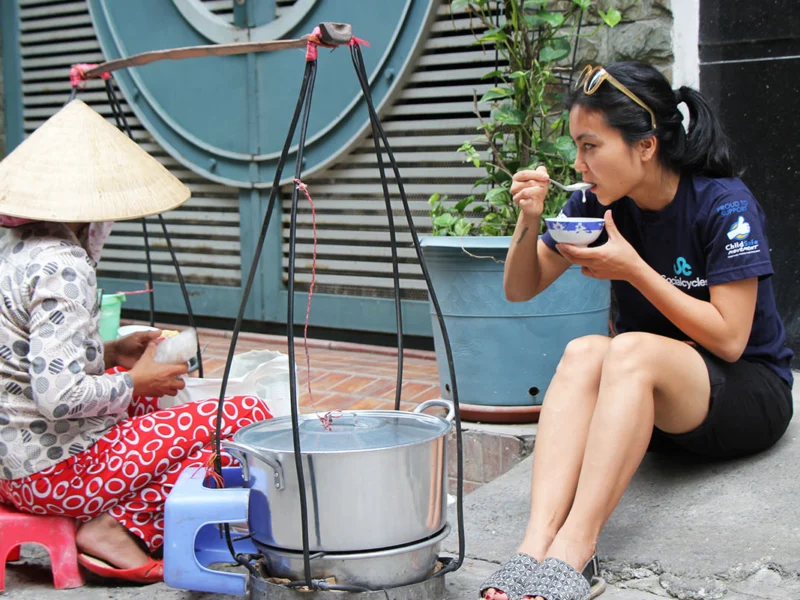
On your first night in Vietnam, in Rach Gia, you eat local seafood and banh xeo. In Can Tho, dinner is street food at the night market, and the next morning you make your own noodles at a noodle factory and visit a cocoa farm. The family you stay with in Ben Tre may run an impromptu cooking class. In the north there is a village lunch on the road to Muong Lay, street food for breakfast when the train reaches Hanoi, and time for an egg coffee in one of the city's cafes. Most breakfasts are included, with some lunches and dinners. Each day of the itinerary shows which.

Where We Sleep

In the south you stay in town hotels in Rach Gia, Can Tho and Saigon, with one night in a family home in Ben Tre, in private rooms. In the north it is a resort in Dien Bien Phu and hotels in Muong Lay, Lai Chau and Sapa, then a night on the sleeper train from Lao Cai to Hanoi in a four-berth cabin, and a last night in a Hanoi hotel. Rooms are twin share, air-conditioned wherever possible. Hotels and restaurants are examples and may change.

  • Rach Gia Dai Luong Hotel
  • Can Tho Ninh Kieu Hotel
  • Ben Tre Local family homestay (private rooms)
  • Saigon Prague Hotel
  • Dien Bien Phu Him Lam Resort
  • Muong Lay Thanh Binh Hotel
  • Lai Chau Muong Thanh Lai Chau Hotel
  • Sapa Sapa Centre Hotel
  • Lao Cai to Hanoi Sapalay overnight train (4 berth cabin)
  • Hanoi Phoenix Hotel

How We Ride

Vietnam is two different rides. The south is flat: three long days of 80 to 100 km on narrow paved roads and back roads through the Mekong Delta, with the last 15 km into Saigon optional. The north is mountain riding on mostly paved roads: a 34 km run down from the border, then three days of 70 to 95 km with between 1,644 m and 2,291 m of climbing each, and an optional 25 km downhill from Sapa to finish. On the climbs everyone rides at their own pace and regroups at set points. There is always a support van. Groups are never more than 10 riders, the bikes are 24-speed mountain bikes, and e-bikes are available.

Routes in the South → Bikes & E-Bikes → FAQ & Travel Info →

km a day in the south
80 to 100
km a day in the north
70 to 95
gears
24
riders at most
10

Rides in Vietnam

Ways to Ride It

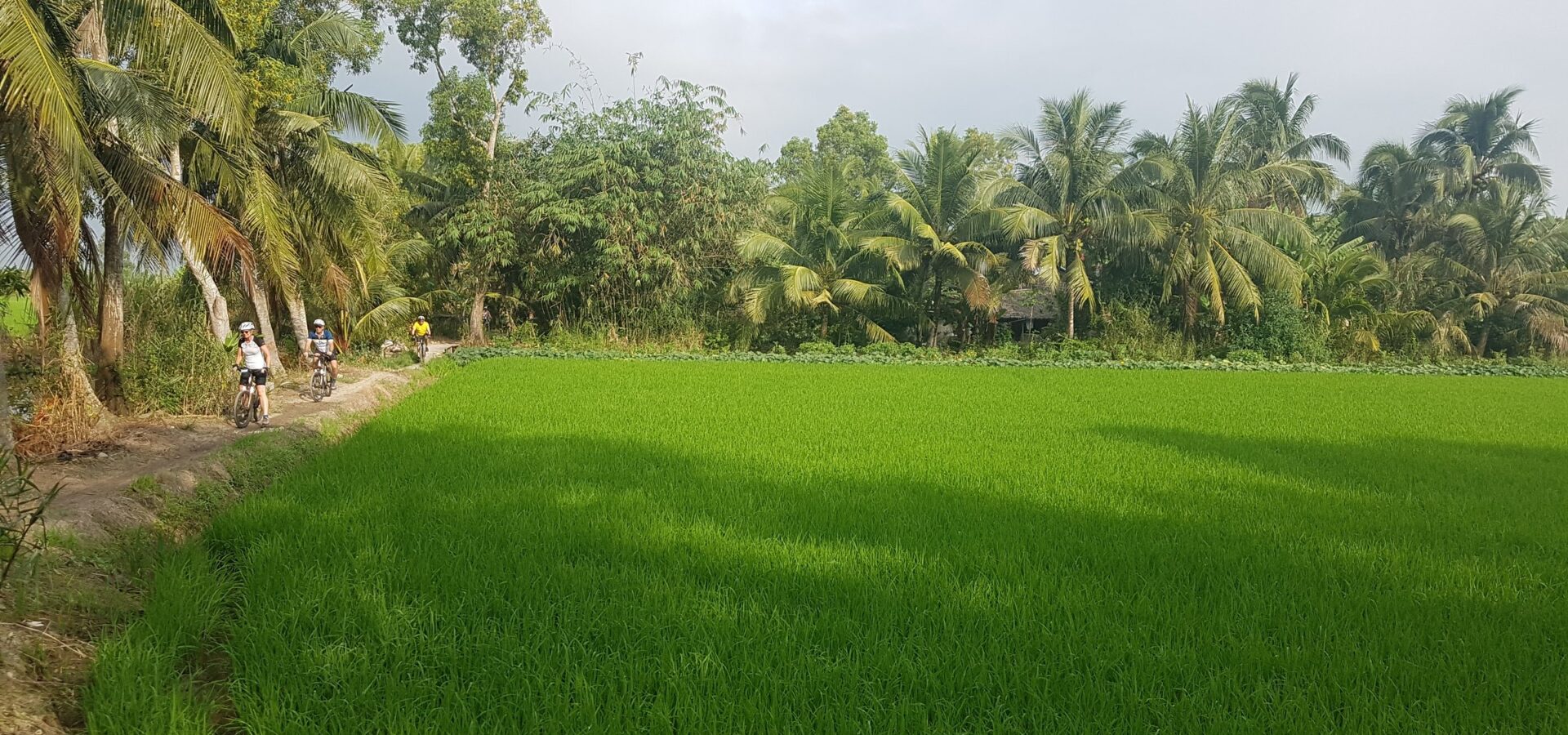
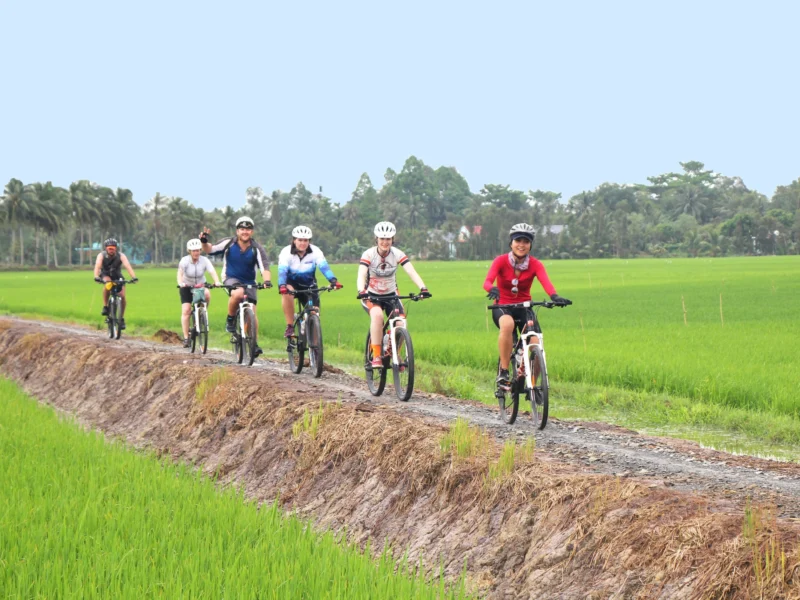
Six smiling riders in single file between green rice paddies

Cambodia → Vietnam · 12 days

  • Difficulty 3 of 5
  • from 2,950 AUD per person, twin share
  • 6 of 12 days cycling
  • Approx 460 km
  • Terrain: Flat, some off road, one hill
  • E-bike option (300 AUD)
  • Start: Phnom Penh
  • Finish: Saigon

The Bokor Mountain climb and pepper farms around Kampot, then over the border into the Mekong Delta for floating markets, a homestay in Ben Tre and the ride into Saigon.
View This Ride →

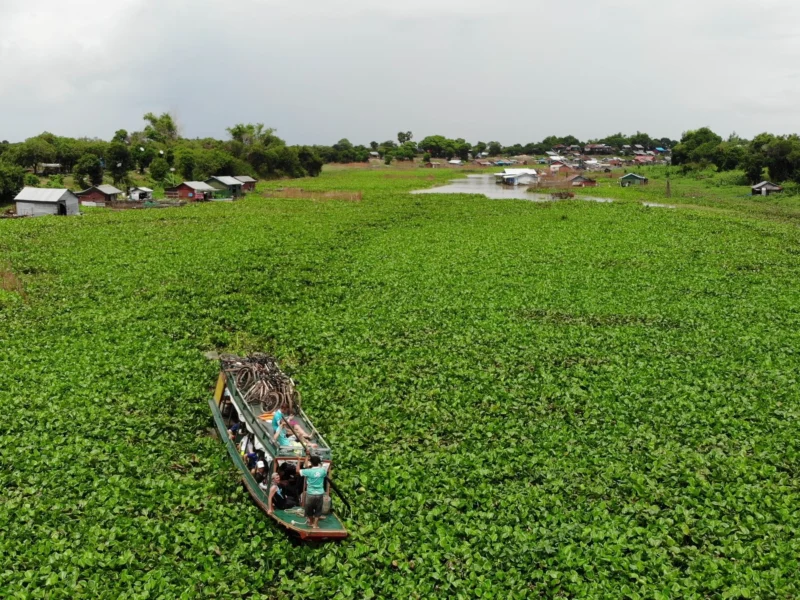
From the air: the longboat carrying the bikes pushes through water hyacinth toward a stilt village

Cambodia → Vietnam · 16 days

  • Difficulty 3 of 5
  • from 3,850 AUD per person, twin share
  • 10 of 16 days cycling
  • Approx 670 km
  • Terrain: Flat, some off road, one hill
  • E-bike option (450 AUD)
  • Start: Siem Reap
  • Finish: Saigon

Angkor to Saigon the long way: temples at sunrise, Battambang's river roads and the Bokor climb in Kampot, then floating markets in the Mekong Delta and a homestay in Ben Tre.

View This Ride →

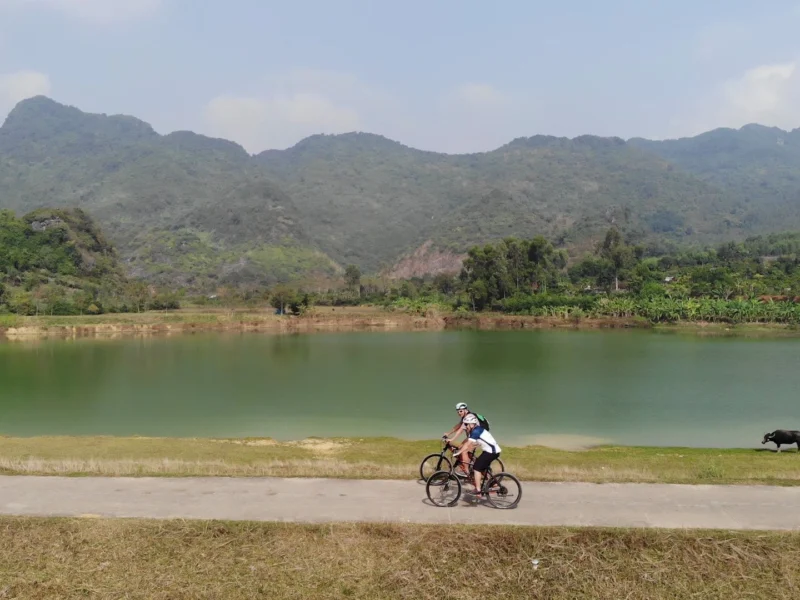
Two riders on a lakeside track below a karst skyline

Laos → Vietnam · 12 days

  • Difficulty 4 of 5
  • from 3,450 AUD per person, twin share
  • 8 of 12 days cycling
  • Approx 419 km
  • Terrain: Mostly paved country roads, mountain climbs
  • E-bike option (290 AUD)
  • Start: Luang Prabang
  • Finish: Hanoi

A village homestay, a long-tail boat at Muang Khua and the border at Dien Bien Phu. Then the climb at Lai Châu, Sapa's mountains and the night train to Hanoi.

View This Ride →

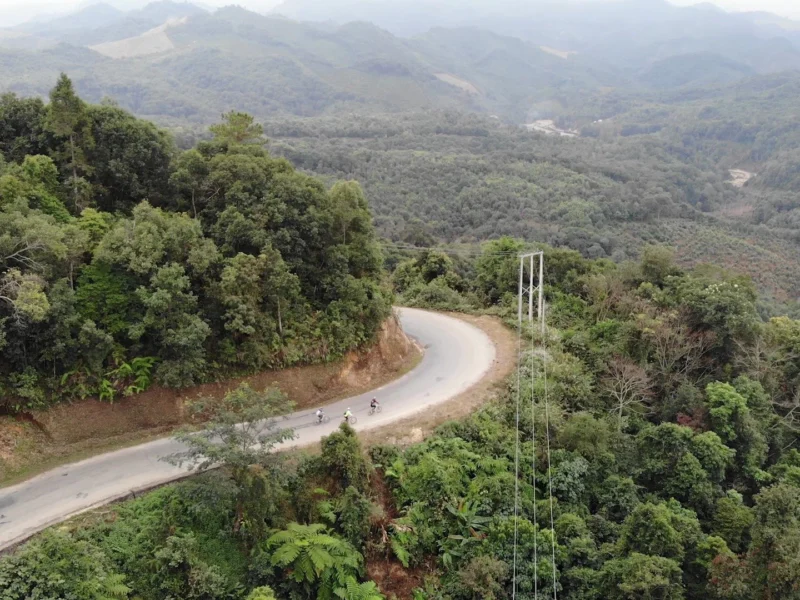
From the air: riders small on a hairpin road through forested hills

Laos → Vietnam · 20 days

  • Difficulty 4 of 5
  • from 5,850 AUD per person, twin share
  • 15 of 20 days cycling
  • Approx 794 km
  • Terrain: Mostly paved country roads, mountain climbs
  • E-bike option (580 AUD)
  • Start: Vientiane
  • Finish: Hanoi

The whole crossing in one ride. Blue lagoons and the Plain of Jars in Laos, a village homestay and a long-tail boat in the north, then the mountains of Sapa and the night train to Hanoi.

View This Ride →

Questions

Questions About Vietnam

Is there a Vietnam-only ride?

Not on the scheduled dates. We ride Vietnam at the end of a ride that starts in Cambodia or Laos. The rides from Phnom Penh and Siem Reap finish in the Mekong Delta and Saigon. The rides from Luang Prabang and Vientiane finish in the mountains of the north, Sapa and Hanoi. If you want Vietnam on its own, ask us about a private or tailored trip.

Do I need a visa for Vietnam?

If your nationality needs one, it must be arranged before you arrive. Vietnam's national tourism authority says the e-visa allows a stay of up to 90 days, and its list of land border gates that accept the e-visa includes Ha Tien and Tay Trang, the two crossings our rides use. Rules differ by nationality, so check before you apply.

How hard is the riding in Vietnam?

It depends which end. The Mekong Delta is flat, but its three riding days are long, at 80 to 100 km each. The north is among our most demanding riding: mountain days with up to 2,291 m of climbing. At both ends there is a support van, and on the climbs everyone rides at their own pace.

What is the O Quy Ho Pass day like?

It is the toughest cycling day of the northern rides. The pass is 38 km long and climbs from about 700 m to beyond 2,000 m. The day has 2,291 m of climbing, followed by a 1,700 m descent into Sapa. The road is mostly paved, and the support van is always nearby if you need a breather or want to skip ahead.

Do I have to ride into Saigon in the traffic?

No. The last 15 km or so into the city is optional, and about half the riders usually take the van. The day starts early to beat the heat and what we can of the traffic. If you do ride in, Saigon has whole lanes and roads set aside for two wheels.

What is the homestay in Ben Tre like?

You stay with a local family in their home in Ben Tre, in private rooms. The group arrives around 5 pm after a full day's ride from Can Tho, and there may be an impromptu cooking class. We use Ben Tre as our base for this part of the delta to avoid the crowds in My Tho.

How does the night train from Sapa work?

After the last, optional ride in the Sapa valley you transfer to Lao Cai railway station for the overnight train to Hanoi. You travel in a four-berth sleeper cabin, which is included in the ride price, and step out of the station the next morning in time for a street food breakfast in the city.

Which organisations do we visit in Vietnam?

The rides from Cambodia finish with Mekong Plus in Saigon, which trains people to make quilts, handicrafts and bamboo bicycles, and runs scholarships, vocational training and microfinance. The rides from Laos finish with Hope Box in Hanoi, a social enterprise that supports women who have experienced gender-based violence. At the last dinner you decide where your donation goes.

Can I stay on in Saigon or Hanoi after the ride?

Yes. Extra hotel nights before or after the ride can be arranged, and the price per night is listed under Extras on each ride's page. Your arrival transfer from the airport is included in the ride price. The transfer back to the airport when you leave is not.

More answers, for every ride: FAQ & Travel Info →

Questions? Talk to Brett

Fifteen minutes on the phone with Brett answers most questions about Vietnam.