What’s wrong with giving money to poor children?
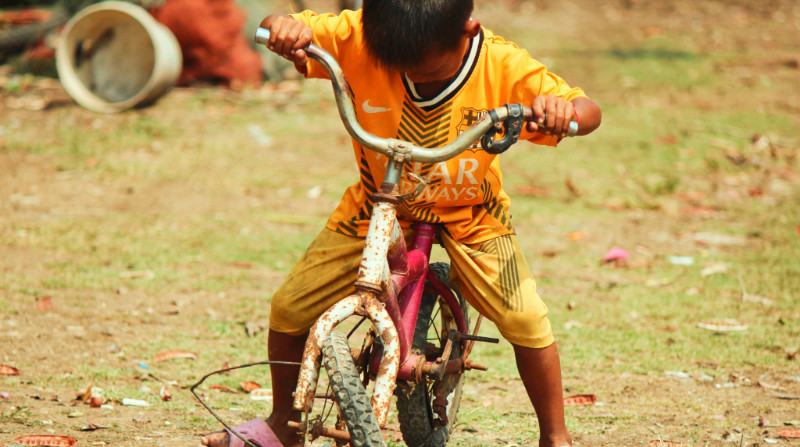
Is it wrong to give money to poor children? No doubt at some point in your travels in Cambodia or Vietnam, or even at home, a child has approached you with big sparkling sad eyes with the hope that you may reach into your pocket and spare some loose change. Just a little bit. It could make all the difference. And you want to make a difference…
But let’s try and take a step back and look at the big picture.
How To Say No Without Feeling Guilty
It can be quite difficult to say ‘no’ to that cute, dirty little face and big sad eyes, but the reality is that it’s the right thing to do. The easiest way to explain it (and to relieve some of the guilt) is that by giving a young street child some money, you’re supporting a life on the streets for that child. Ever heard the saying, ‘Your dollar is a vote for the world you want to live in’? This applies to the act of giving, especially to street kids in countries like Cambodia.
The more money a child makes on the street from begging, the less likely they are ever going to give it up. Which means that there is no chance that they will (be allowed to) go to school. And us adults know that the appeal of youth quickly fades with age, so by the time the street kids hit middle teens, their options are more than a little limited.
What Would Happen If Everybody Did It?
Let’s take it a step further and talk about scale. If giving money to poor street kids is a good thing, then everybody should do it. Because we all want to do something good and help out a community. So, if you’re one traveller in Phnom Penh, and you give a kid a dollar, start to consider what would happen if all the other travellers/people in Phnom Penh do the same. All of a sudden, the kid makes A LOT of money.
Great, right!? We’ve just solved poverty!!
Not really. As we said, the child will never go to school and he/she won’t be a child forever. Think about where the money will go as not much of it will end up in their pocket. Almost all of it is for the child’s parents/carers/pimps/mafia, or whoever is keeping the child out of school and on the street. And if the child is making a lot of money for the adults, then the next step is for the parents to create more children for the street, which will make them even more money. And if it’s not the parents, then sadly, it will be the child traffickers. At the risk of sounding brutal, you could argue that giving a child on the street a dollar is the same as financially supporting child trafficking. Ouch.
What about buying something from a child?
Unfortunately, it’s the same thing. Many children are set up by their guardians with a micro business, whether it be selling books, foods or souvenirs to tourists. Like most businesses, they have targets and budgets that they need to hit and return the sales to the guardians. Supporting a child selling goods is simply supporting child labour.
There is a popular scam in Cambodia and other parts of the world that involves a young mother with a sleeping baby who is begging to buy some milk formula for her baby. She doesn’t even want the money, just for you to go into the shop with her and buy it. Then you know it’s for the baby as it’s worth nothing for her. Problem is, the shopkeeper is in on the scam and after you leave the area, she returns the formula for a refund less the shopkeepers commission. You just got played for about US$15.
How is just doing nothing and letting them starve ‘the right thing’?
Great question, glad you asked. There a huge amount of options for you to explore. In Cambodia, there are organizations who tackle these sorts of issues with street children and aims to provide education for them. One of the many challenges is that the parents/guardians won’t let them go to school because they are making too much money begging/selling on the street because of tourists! However, if people supported some of these organizations instead, then they will start to make a real positive difference to lives and knock a dent in poverty!
What can I do instead?
At Social Cycles, we highly recommend learning more from people like Friends International. They do fantastic work with young people and have taught many Social Cycles riders how to be a more responsible traveller. They even created an ethos, widely shared across the world, to help protect children called ChildSafe. In it, you can find 7 tips on how to be a better traveller.

If you’re not a fan of giving your hard earned cash to ‘big’ organizations, then you can still ‘do good’ with your money by buying from businesses that support social impact in the area. This could be anything from where you get your cafe latte, your spring rolls, your souvenirs for mum or where you rest your head at night. If you’re travelling to Asia any time soon and want to do learn how to find these wonderful organizations, then Friends International have done all the hard work for you. Just check out this link!
Social Cycles is an official partner of ChildSafe